Chenglin Li 李承霖

First-year PhD Student · University of Michigan

Hi! I'm a first-year PhD student at the University of Michigan, specializing in Human-Computer Interaction and advised by Anhong Guo.

My research focuses on designing and evaluating multimodal systems that support lasting changes in behavior and workflows. I study how people work and build interactive systems that enhance human capabilities in real-world tasks.

Outside research, I enjoy badminton and performing Peking Opera.

Research interests: Human–AI interaction · Physical task guidance · Accessibility

News

  1. RAVEN accepted to CHI 2026 as a full paper!

  2. RAVEN won the Best Demo Award at ASSETS 2025. Congratulations to the team!

Show moreShow less news
  1. RAVEN accepted as a demo at ASSETS 2025.

  2. SceneGenA11y accepted to CHI 2025 Late-Breaking Work.

Publications

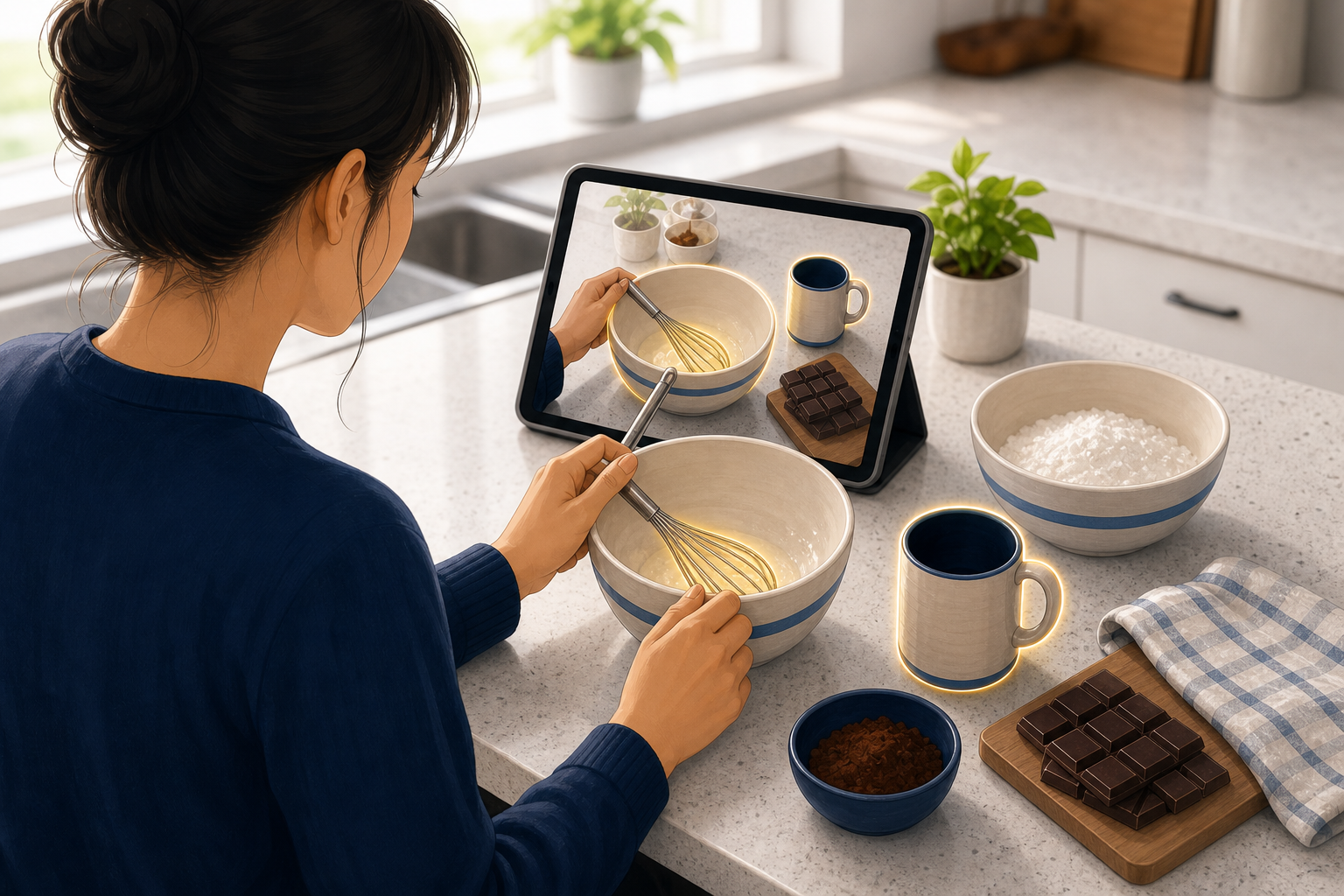
ICON overview comparing instructional videos and the visual context of physical tasks
Preprint · 2026In submission to CHI 2027

Substantial, Decomposable, and Invisible: Visual Context Misalignment in Instructional Videos for Physical Tasks

Yayuan Li*, Chenglin Li*, Jingying Wang, Filippos Bellos, Anhong Guo†, Jason J. Corso†

Show abstractShow less for ICON

Abstract. Two studies with 56 participants examine how visual context misalignment in instructional videos affects physical task performance and user perception. We compare in-context instructional videos (ICON) with conventional videos, then isolate four visual attributes: task object intrinsics, task object state, environmental context, and observational context. Aligned videos improve completion quality and speed, while individual misalignments degrade performance.
RAVEN overview showing conversational accessibility in virtual 3D environments
CHI 2026ASSETS 2025 · Best Demo Award

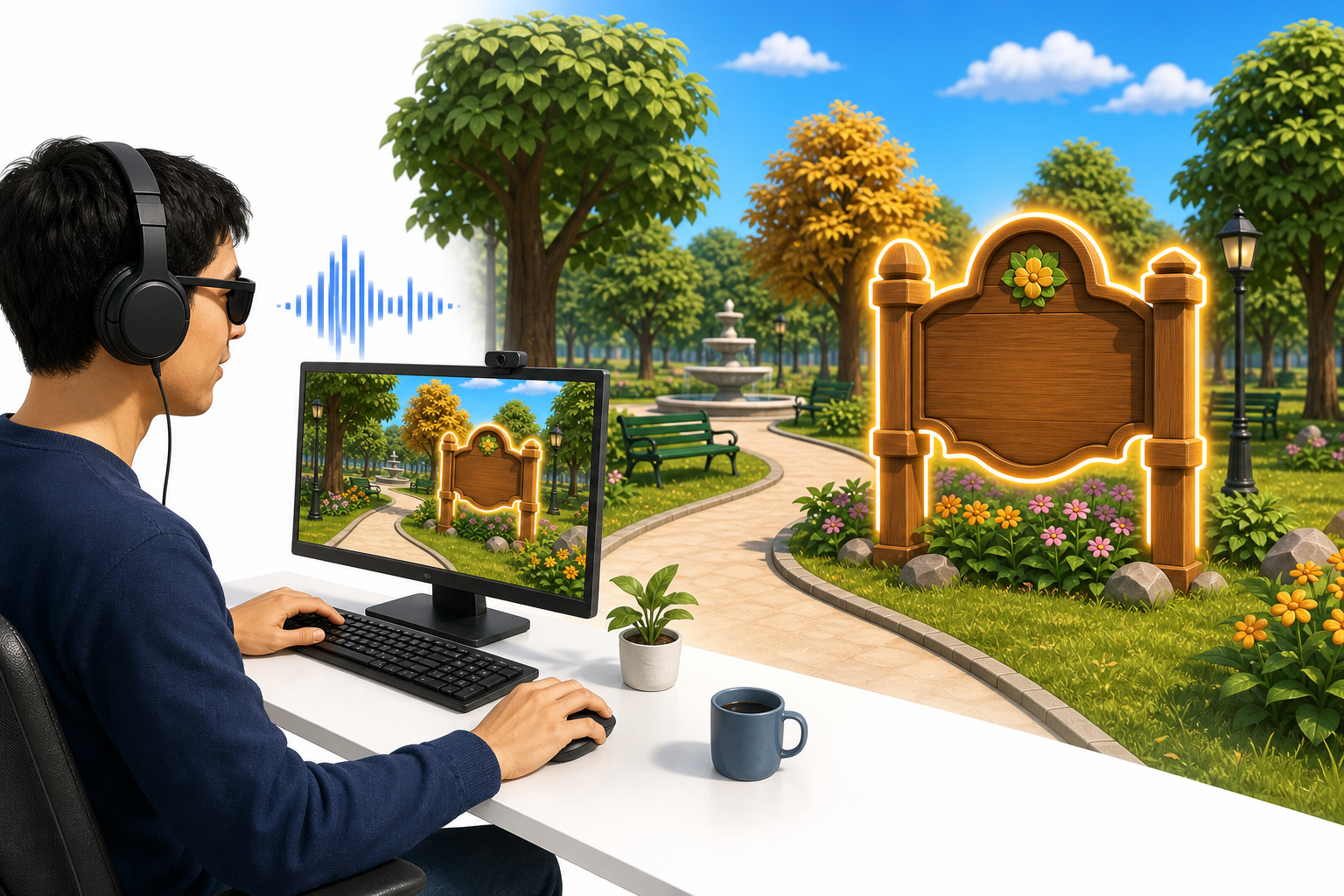
RAVEN: Realtime Accessibility in Virtual ENvironments for Blind and Low-Vision People

Xinyun Cao, Kexin Phyllis Ju, Chenglin Li, Venkatesh Potluri, Dhruv Jain

Show abstractShow less for RAVEN

Abstract. RAVEN enables blind and low-vision people to query and modify virtual 3D scenes in real time using natural language. Evaluations with eight blind and low-vision participants and six Unity developers explore how conversational programming can support personalized accessibility, along with the challenges of reliability, transparency, and trust.